
Overview of U.S.-China Relations
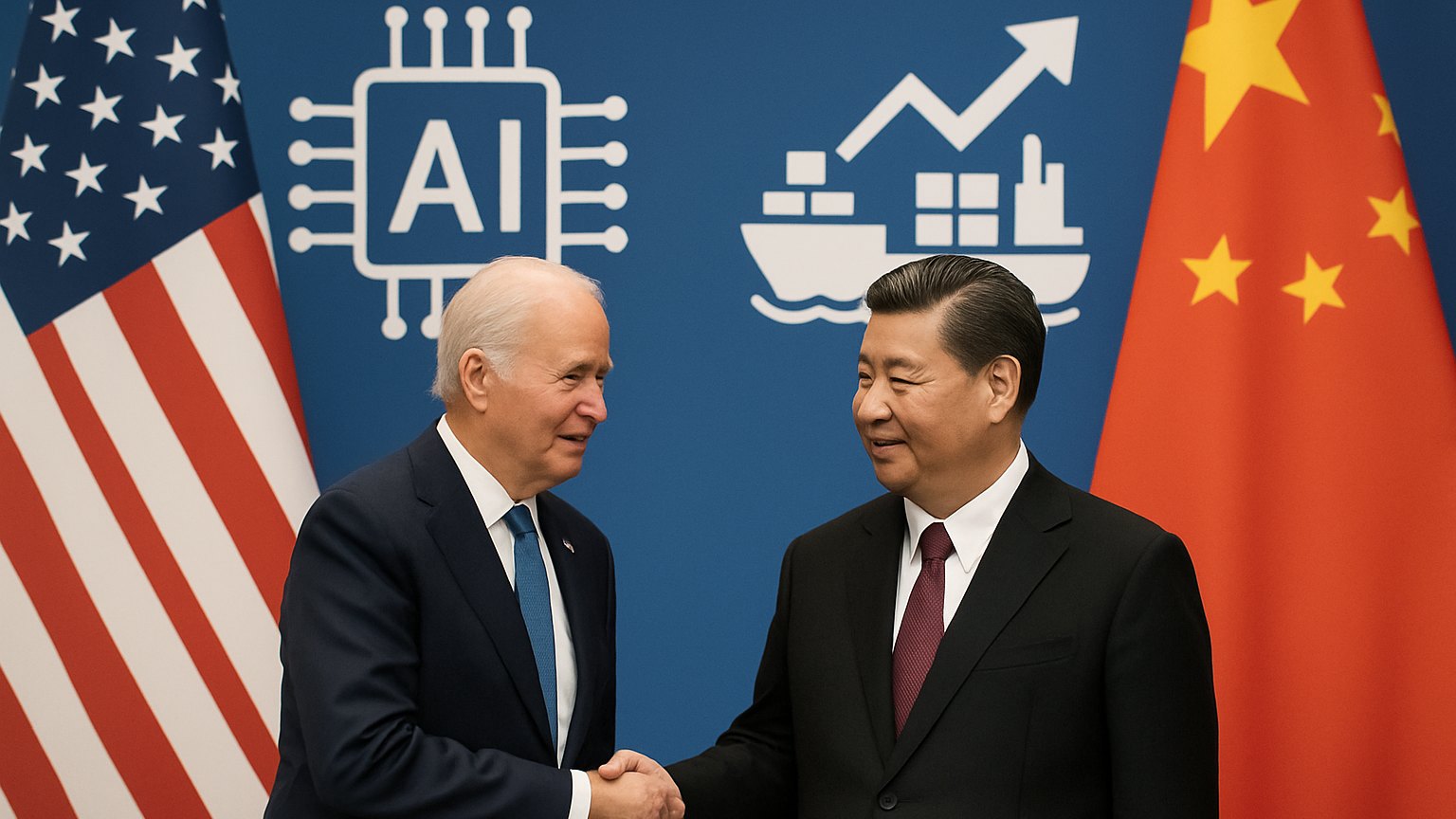
Amid escalating geopolitical tensions, U.S. President Donald Trump and Chinese President Xi Jinping convened in Washington to discuss pivotal issues, including trade, artificial intelligence (AI), and numerous international challenges like Iran and Taiwan. Their meeting aimed at stabilizing relations reflects both leaders' desire to engage in dialogue, despite the absence of major breakthroughs anticipated due to ongoing competitive frictions.
Impact of Trade Wars
The trade war between the United States and China has fundamentally altered the economic landscape between these two global giants. High tariffs previously imposed by both nations have seen some adjustment, but targeted restrictions remain intact. For instance, the U.S. has consistently employed measures to blacklist Chinese companies accused of engaging in security threats or espionage. This situation is indicative of a broader strategy to curb China's technological ascendance, particularly in fields like AI.
Tariff Adjustments and Economic Repercussions
While some tariffs have been scaled back, new barriers continue to challenge the economic interactions between the two nations. According to the Office of the United States Trade Representative, both governments are investing in mechanisms that ensure regulatory compliance, but these strategies prioritize national security over sheer economic advantage. The trade war's legacy leaves businesses and consumers to navigate a more complex and less predictable marketplace.
AI Competition: A New Frontier
The AI arms race represents a critical dimension of U.S.-China tensions. The United States has implemented restrictions on exports of advanced AI chip technology to China. For example, in 2022, the U.S. expanded its export control measures, targeting high-performance chips that could bolster China's military capabilities. This restriction aims to disrupt Beijing's development of AI technologies that could enhance its defense and geopolitical standing.
Security Concerns Voiced by China
In response to these actions, Chinese authorities have raised alarms over the perceived threats posed by foreign dominance in AI. The Chinese government has labeled the U.S. export controls as an attempt to stifle its technological progression. These claims highlight China's ongoing efforts tooo achieve self-sufficiency in critical technologies as a national imperative. The Ministry of Industry and Information Technology in China expressed concerns that such moves could not only harm bilateral relations but also stifle global technological cooperation, undermining security and economic stability.
Dialogues on AI Incident Notifications
Despite the competing narratives and escalating tensions, both the U.S. and China have acknowledged the need for dialogue surrounding the burgeoning field of AI. Recently, officials from both sides have engaged in discussions to establish a notification mechanism concerning significant AI incidents, an initiative reflecting a cautious but necessary step towards mutual cooperation. Suggestions have included protocols that would aid in managing potential crises stemming from AI technologies, emphasizing a shared goal of ensuring safety and accountability in AI deployment.
The Broader Geopolitical Landscape
These ongoing tensions surrounding trade and AI occur within a broader geopolitical context where issues like Iran's nuclear ambition and Taiwan's sovereignty also play significant roles. The U.S. has maintained a foothold in the Asia-Pacific region largely as a counterbalance to China's rising influence. This dynamic raises critical questions regarding the potential for military confrontations and the implications they hold for international relations.
Taiwan: A Flashpoint for Tensions
Taiwan continues to be a sensitive point in U.S.-China relations. Beijing's increasing military exercises near Taiwan have prompted heightened alertness in Washington. The U.S. government has expressed support for Taiwan, leading to accusations from China of foreign interference. With military buildups occurring on both sides, the Taiwan Strait serves as a critical area for diplomatic and military considerations, often cited as a potential flashpoint for conflict.
Conclusion
While President Trump and President Xi pursue avenues for stabilizing U.S.-China relations, the underlying issues of trade and AI competition give rise to uncertainty in this pivotal bilateral relationship. Both nations appear cognizant of the significant repercussions stemming from a full-blown conflict, raising prospects for dialogue even amidst entrenched positions.
The technological rivalry, particularly in AI, along with trade disagreements, points to an evolving landscape where cooperative engagement will be necessary to avoid escalation into broader confrontations. As global leaders watch these developments unfold, the implications for international trade—and technological innovation—remain profound and far-reaching.
Tags
- US-China Relations
- AI Competition
- Trade Tensions
- Geopolitical Issues
- Taiwan
Meta Description
U.S.-China tensions over AI and trade escalate amid a complex geopolitical landscape, blending cooperation with competition between the two nations.