
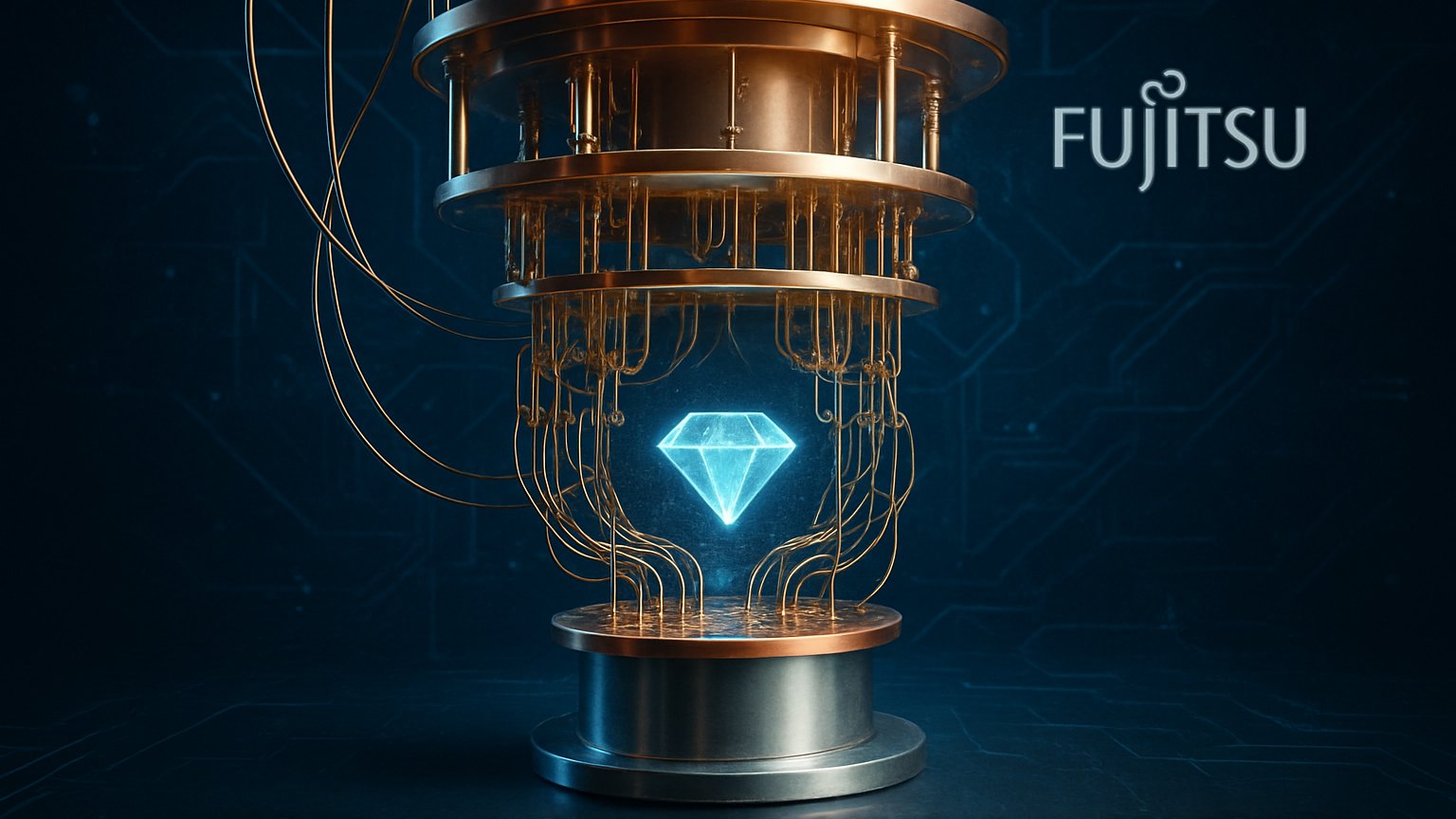
Fujitsu's Diamond-Spin Quantum Computer Prototype
Fujitsu has recently made significant strides in the realm of quantum computing with the unveiling of a diamond-spin quantum computer prototype. This new development represents a promising leap that could influence various sectors, including finance, healthcare, and logistics. As quantum computing technology continues to evolve, Fujitsu's efforts may reshape how complex data problems are approached and solved.
What are Diamond-Spin Quantum Computers?
At the heart of Fujitsu's innovation is the diamond-spin quantum computer, which utilizes nitrogen-vacancy (NV) centers in diamonds. These NV centers are defects in the diamond crystal lattice that can host qubits, the fundamental units of quantum information. The unique arrangements within the diamond structure allow for stable qubit operation, making it a ground-breaking component in advancing quantum computing technology.
Operational Advantages
Fujitsu's diamond-spin prototype stands out for its operational advantages. While traditional quantum systems often struggle with qubit decoherence (loss of information over time), Fujitsu’s prototype shows promising stability and coherence times. The diamond environment provides excellent thermal stability and minimizes interactions with surrounding noise, which are critical factors for maintaining qubit integrity.
In addition, the prototype potentially allows for easier scalability compared to other quantum computers. The solid-state nature of the diamond platform means that integrating additional qubits can be more straightforward, paving the way toward building larger, more powerful quantum systems. This scalability is crucial for practical applications, where sophisticated algorithms require more qubits to process complex computations efficiently.
Practical Applications
The implications of Fujitsu's advancements in quantum computing are wide-ranging. Potential applications include:
1. Financial Modeling
In finance, quantum computers can facilitate complex simulations that analyze the behavior of financial markets. By utilizing quantum algorithms, Fujitsu's technology could enable faster and more accurate risk assessments, portfolio optimization, and algorithmic trading strategies, ultimately impacting investment decisions and economic forecasting.
2. Drug Discovery
The healthcare sector stands to benefit significantly from quantum computing. The use of Fujitsu's diamond-spin technology could accelerate drug discovery by simulating molecular interactions at a quantum level, leading to the identification of new drugs and therapies more efficiently than classical methods. Researchers might be able to identify viable drug candidates much faster, which is especially critical in urgent healthcare scenarios like global pandemics.
3. Supply Chain Optimization
Logistics and supply chain management, known for their complexity, can also leverage quantum computing capabilities. Models that involve numerous variables and constraints may benefit from the computational power of Fujitsu’s quantum prototype. Quantum algorithms may optimize routing, inventory management, and resource allocation more effectively than current algorithms, leading to cost reductions and enhanced efficiency.
The Significance of Fujitsu's Breakthrough
Fujitsu's advancements mark a notable shift in the competitive landscape of quantum technologies. As established tech giants like IBM and Google continue to push for supremacy in quantum computing, Fujitsu’s unique approach using diamond-spin qubits could differentiate its offerings and establish new benchmarks for operational efficiency and application versatility.
This development not only highlights increased investments in quantum R&D but also emphasizes the global race for technological leadership in quantum computing. As more companies explore quantum capabilities, the demand for skilled professionals and quantum literacy will likely rise. The economic and social implications of widespread quantum adoption remain a frontier of discussion among technologists, policymakers, and academics.
Challenges Ahead
Despite its promising future, several challenges remain before Fujitsu's diamond-spin quantum computer can be fully realized in practical applications. Key challenges include:
- Error Correction: Effective quantum error correction methods that protect against qubit errors will need to be developed and integrated to realize practical and reliable quantum computing capabilities.
- Integration with Classical Systems: Merging quantum computing with existing classical systems to create hybrid solutions may pose technical difficulties that need resolution for effective deployment.
- Standardization: As various companies develop different quantum technologies, standardizing protocols could become a focal point for the industry's progress.
Conclusion
Fujitsu's development of a diamond-spin quantum computer prototype is a crucial milestone in the journey toward practical quantum computing. With its operational advantages and the potential for diverse applications across industries, this innovation signifies a possible shift in how businesses approach problem-solving today. However, the path to widespread implementation is filled with challenges that will require continued research, collaboration, and investment. As Fujitsu continues to refine its technology, the world will be watching closely to see how these advancements unfold and what new frontiers they may open in quantum computing and beyond.
Tags: Quantum Computing, Fujitsu, Diamond-Spin, Technology Advancements, Industry Applications
Meta Description: Fujitsu unveils a diamond-spin quantum computer prototype, showcasing advantages and potential applications across various industries including finance and healthcare.