
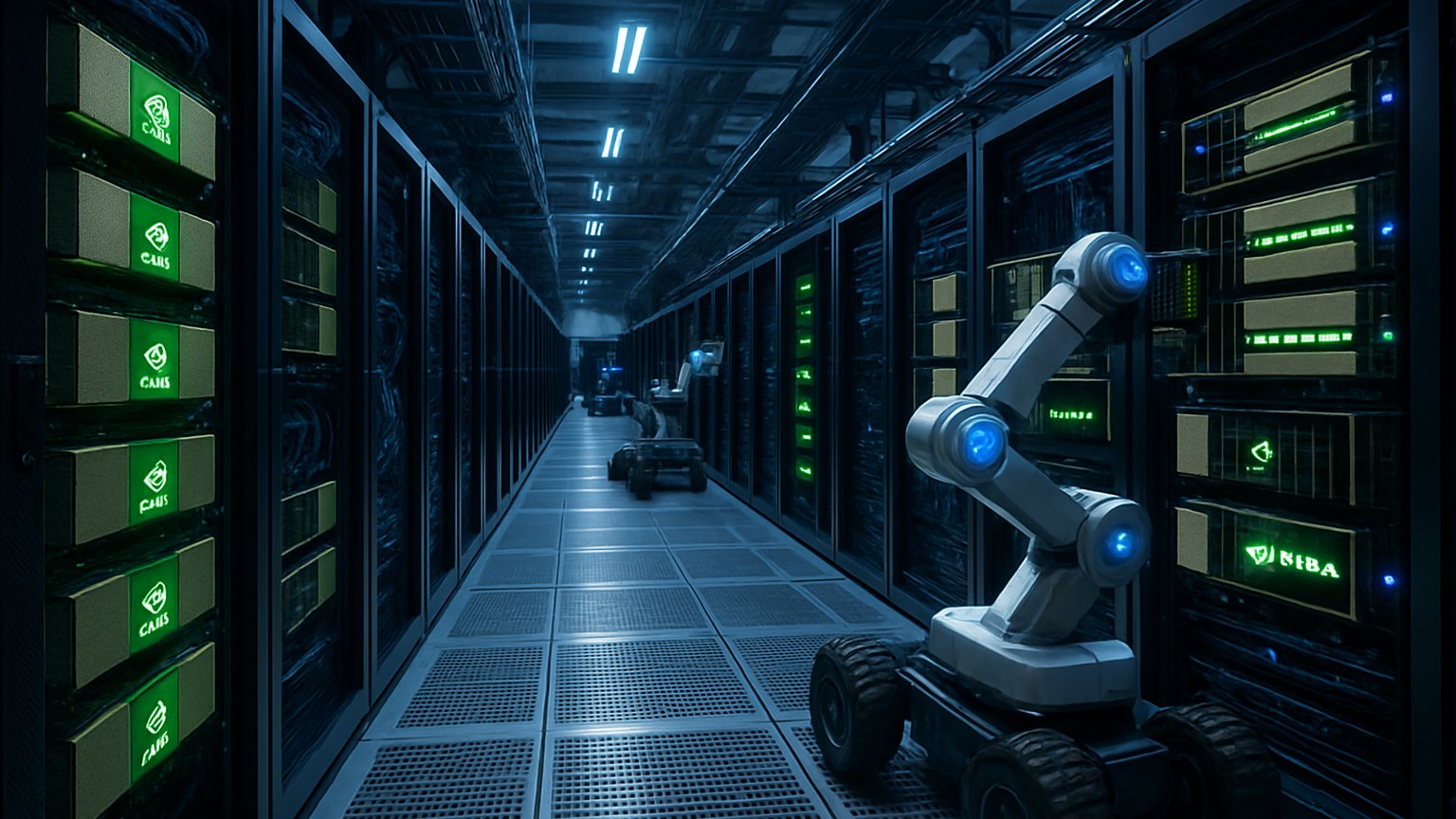
Overview of Nvidia's AI Innovations
At CES 2026, Nvidia unveiled its next-generation AI accelerators, marking a significant leap in the capabilities of AI hardware technologies. The company's focus on pushing the boundaries of AI hardware lies not only in improving performance but also in diversifying applications across industries. With advancements designed to power both data centers and innovative physical AI systems, Nvidia aims to revolutionize how AI interacts with the world.
Technical Specifications
Nvidia's upcoming AI accelerators are built on a new architecture optimized for performance and energy efficiency. The key features include:
- Enhanced CUDA Cores: These new cores are designed to improve parallel processing capabilities, which are essential for training complex AI models. They allow for up to 30% increased throughput compared to previous generations.
- High Bandwidth Memory (HBM): The accelerators utilize HBM 3, providing faster data access and significantly reducing latency during data processing tasks. This is crucial for applications streaming large datasets, such as those found in deep learning tasks.
- AI-Specific Instructions: The architecture incorporates instructions tailored for AI workloads, making it easier for developers to optimize their applications for the accelerator’s capabilities.
- Unified Memory Access: Nvidia has introduced unified memory that allows different data types to reside in a single memory space, streamlining data access for applications ranging from AI model training to real-time inference.
Physical AI Systems: A New Frontier
Nvidia's presentation emphasized its commitment to exploring physical AI, a field that extends the company's innovative hardware applications into robotics and autonomous vehicles. The AI accelerators play a critical role in these technologies by offering the computational power necessary for real-time decision-making and machine learning.
Robotics Applications
In robotics, Nvidia’s next-gen accelerators are expected to handle complex tasks such as object recognition, navigation, and manipulation with unmatched efficiency. The acceleration of these processes opens the door for advancements in industrial automation, precision agriculture, and even smart home devices. Such capabilities could lead to robots that adapt to human environments seamlessly, enhancing productivity while reducing operational costs.
Autonomous Vehicles
As part of its push into self-driving technology, Nvidia's accelerators are designed to process data from numerous sensors simultaneously. This allows for improved perception and decision-making, which are critical for safety in autonomous vehicles. The new technology promises to significantly enhance the processing power available for vehicle AI, potentially accelerating the deployment of fully autonomous systems on public roads.
Roadmap for Data Centers
Another focal point of the announcement was Nvidia's roadmap for data centers in the context of AI adoption. The next-gen AI accelerators are explicitly designed to meet the increasing demand for AI compute power in data centers. As businesses turn to AI to optimize operations, data handling, and analytics, the need for robust, efficient hardware becomes vital.
Scalability and Resource Efficiency
The new architecture is also designed for scalability, which allows data centers to expand their capabilities without incurring exponential costs. The efficient use of energy is particularly significant in today’s environment, where sustainability is a growing concern. This aligns with Nvidia’s strategy to position itself as a leader in not just AI innovation but also in sustainable technology.
Implications for Industries
The advancements showcased by Nvidia at CES 2026 are set to impact multiple sectors significantly:
- Healthcare: The ability to process vast amounts of medical data swiftly will enhance AI applications in diagnostics and personalized medicine.
- Finance: Real-time data analysis capabilities will transform fraud detection systems and algorithmic trading, providing more significant insights and quicker transactions.
- Entertainment: Enhanced graphics capabilities will uplift the gaming experience and virtual reality applications, creating more immersive environments.
Confirmations vs Claims
While Nvidia has showcased promising specifications and applications, it is vital to differentiate between confirmed facts and ambitious projections. The specifications disclosed during CES 2026 were corroborated by various benchmarks demonstrating improved performance versus legacy products. However, many claims regarding the transformative impact of physical AI and the full implementation timeline remain speculative. Nvidia has set ambitious goals for these technologies, and while the potential is significant, the realization of these claims may depend on various factors, including market acceptance and regulatory challenges in fields like autonomous vehicles.
Conclusion
Nvidia's innovations at CES 2026 highlight an era where AI accelerators not only power digital solutions but also bridge the gap between the virtual and physical realms. By focusing on essential sectors such as data centers, robotics, and self-driving cars, Nvidia is poised to lead the charge in AI technology. As the industry evolves, the implications of these advancements will ripple across economies, reshaping how we live, work, and interact with technology.