
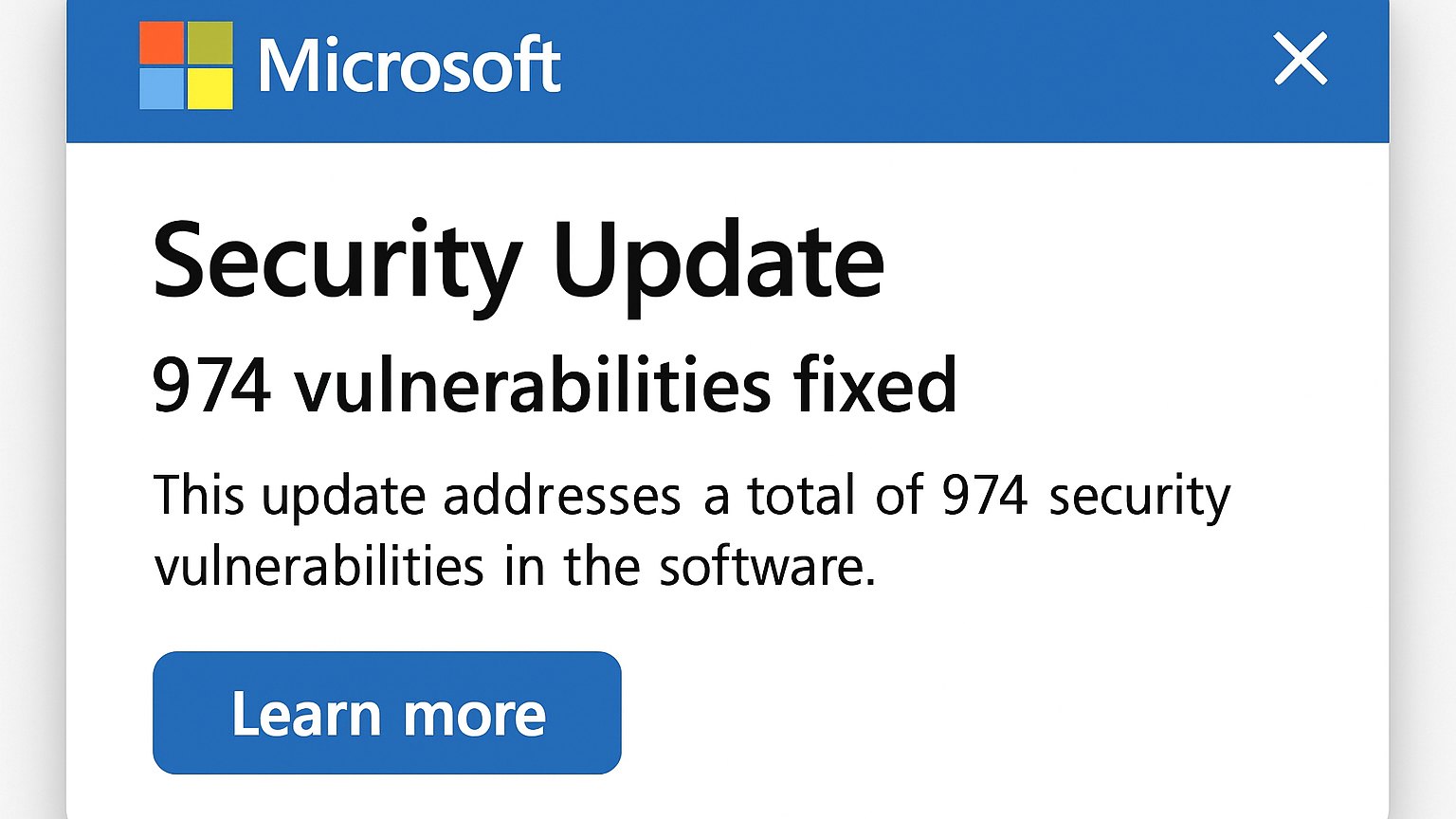
Overview of the September 2026 Patch Tuesday Release
In a landmark release on September 12, 2026, Microsoft issued its Patch Tuesday security updates addressing an astonishing 974 vulnerabilities. This unprecedented number includes two significant zero-day flaws, marking a crucial moment in the realm of cybersecurity. The scale of this update has raised eyebrows across the tech industry and has broader implications for security practices enterprise-wide.
The Surge in Vulnerabilities
The rise in the number of vulnerabilities fixed this month is attributed largely to recent advancements in AI-assisted vulnerability detection technologies. These AI systems enhance the speed and accuracy of identifying security flaws, which could explain the jump from previous months. Prior security updates rarely surpassed 500 vulnerabilities, making this release nearly double any past figures.
Microsoft has acknowledged that the integration of AI-driven tools in their security protocols plays a pivotal role in both detecting and addressing potential risks before malicious actors can exploit them.
Confirmed Facts vs. Claim
While the confirmed facts regarding the sheer number of vulnerabilities and the zero-day flaws are notable, claims surrounding the effectiveness of AI must be scrutinized.
Confirmed Facts:
- Microsoft fixed 974 vulnerabilities, with two labeled as zero-day flaws.
- AI has been integrated into vulnerability scanning and detection processes.
Claims to Consider:
- Although AI has shown promise in enhancing detection capabilities, the full extent of its impact on reducing exploit rates remains to be conclusively proven. Industry experts have expressed mixed opinions on whether AI alone can keep pace with increasingly sophisticated cyber threats.
Implications for Cybersecurity Practices
This spike in vulnerabilities presents several implications for cybersecurity practices:
Increased Urgency for Patch Management
Organizations will need to reorganize their approaches to patch management. The vast number of vulnerabilities necessitates that IT teams prioritize regular updates and implement automated systems for applying patches. The lag time between identification and patching can leave firms vulnerable to attacks, especially for the zero-day flaws that can be exploited without warning.
Reevaluation of Risk Assessment Protocols
With the growing number of vulnerabilities, traditional risk assessment protocols might require reevaluation. Companies may need to modify how they gauge the severity of vulnerabilities and risks associated with their systems. Cybersecurity frameworks may evolve as organizations adapt to the new landscape where vulnerabilities are more numerous and potentially more severe.
Enhanced Focus on Employee Training
Human error remains one of the primary causes of security breaches. The influx of vulnerabilities necessitates that employees are better trained to recognize issues and understand the importance of software updates. Organizations should enhance training programs to ensure that all staff members understand the implications of the new security landscape.
The Role of AI in Vulnerability Management
AI's introduction into the cybersecurity ecosystem represents a double-edged sword. Here’s how it impacts vulnerability management:
Positive Contributions
- Speed and Efficiency: AI can analyze vast troves of code much faster than human analysts, making it possible to identify vulnerabilities that may have previously gone unnoticed.
- Continuous Monitoring: AI-enabled tools can offer 24/7 monitoring of security systems, enabling organizations to respond rapidly to threats.
- Predictive Capabilities: AI can potentially predict where future vulnerabilities may arise based on analytics and programming trends, allowing for proactive measures.
Potential Challenges
- Overreliance on AI: While AI can improve detection rates, organizations must remember that AI is not infallible. Relying solely on AI tools without human oversight could result in critical vulnerabilities being overlooked.
- AI-Ecosystem Arms Race: As AI technology expands, so too does the risk of adversaries using AI for malicious purposes, leading to a perpetual arms race in cybersecurity.
Looking Ahead
As cybersecurity threats evolve and become more complex, it is pivotal for organizations to adopt an agile security strategy, considering the findings from Microsoft’s record-breaking update. The intelligence behind AI offers substantial promise but also poses significant challenges.
Organizations must prepare not only for immediate updates but also for the broader questions of how they'll manage risks in a world where vulnerabilities continue to proliferate. Collaborative efforts between technology providers, cybersecurity experts, and organizational leaders are essential to ensure that advancements in AI do not outpace the strategies designed to combat them.
Conclusion
Microsoft's September 2026 Patch Tuesday heralds a new era in proactive security management, but it also serves as a cautionary tale of the ever-evolving landscape of cybersecurity risks. The partnership between human insight and AI capabilities will likely shape future frameworks and best practices as organizations strive to safeguard their data and maintain trust in an increasingly digital world.