
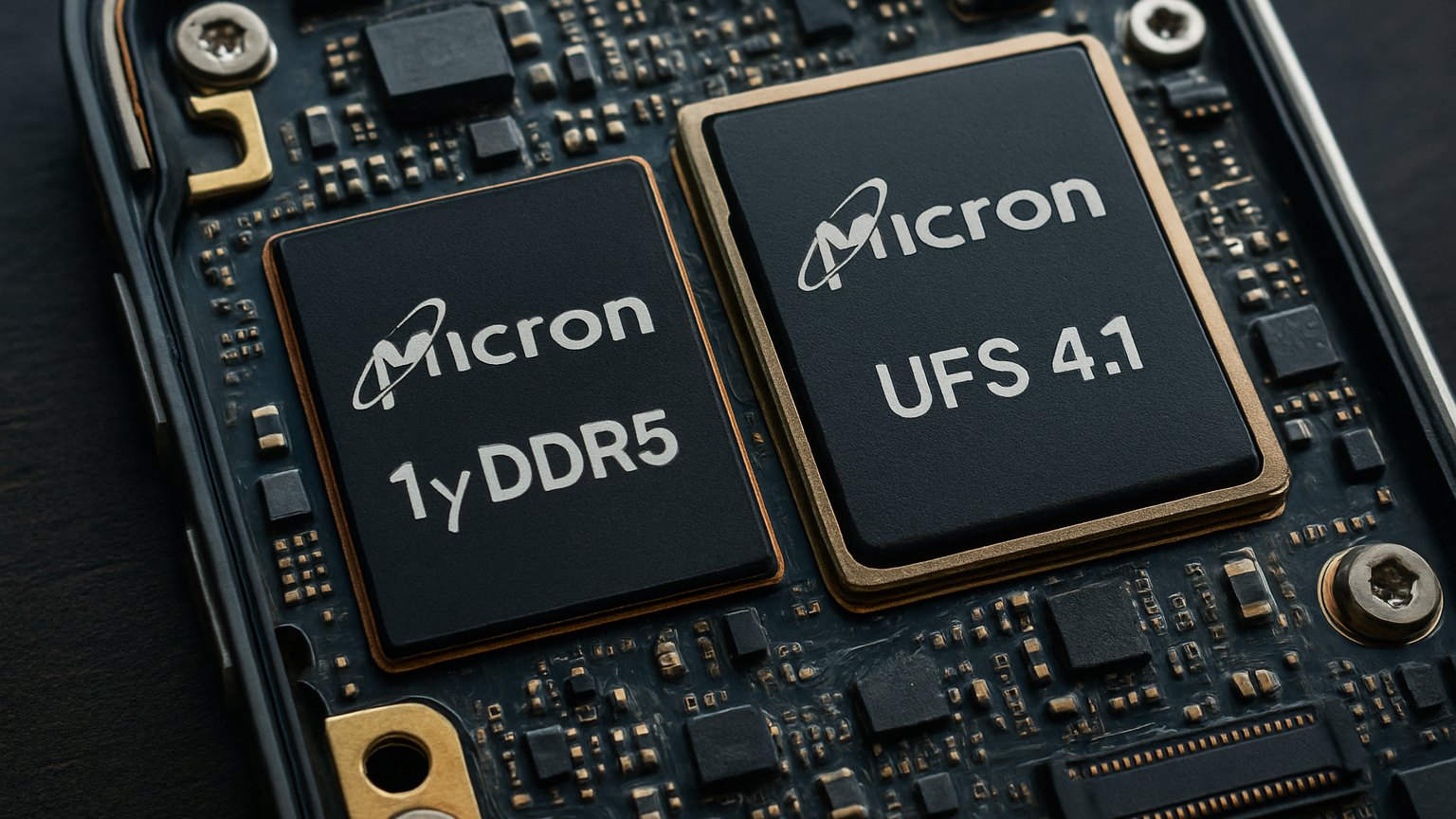
Introducing Micron's 1γ DDR5 and UFS 4.1 Solutions
Micron Technology, a leading provider of innovative memory and storage solutions, has recently announced the world’s first 1γ (gamma) DDR5 samples alongside its UFS 4.1 mobile storage solutions. These advancements mark a significant leap forward in mobile technology, particularly in response to the increasing demands of artificial intelligence (AI) workloads in smartphones. This article explores the technical specifications, potential applications, and broader implications of these innovations.
Technical Specifications of Micron's Innovations
1γ DDR5 Memory
Micron's 1γ DDR5 is designed to enhance performance significantly compared to its predecessors. Key specifications include:
- Data Rate: Micron’s new DDR5 memory offers data rates starting from 8.4 Gbps, targeting up to 9.6 Gbps in future iterations.
- Capacity: The memory can achieve densities of 16GB to 64GB per module, allowing for better multitasking and improved overall device performance.
- Power Efficiency: The 1γ DDR5 chips consume approximately 20% less power than traditional DDR4 solutions, which is crucial for prolonging battery life in mobile devices.
UFS 4.1 Mobile Storage
Micron’s UFS 4.1 technology complements the DDR5 offerings by delivering faster read and write speeds. Here are the important specs:
- Sequential Read Speed: Up to 4,200 MB/s, significantly outperforming UFS 3.1 technology.
- Sequential Write Speed: Achieving up to 2,800 MB/s, which enables seamless saving and retrieval of large files and applications.
- Capacity Options: Ranging from 128GB up to 1TB, catering to various smartphone and mobile device requirements.
Applications in Mobile Technology
Enhancing AI Workloads
With AI continuing to penetrate various facets of mobile technology, the need for faster and more efficient memory and storage solutions has never been more pressing. Micron's advancements in both 1γ DDR5 and UFS 4.1 are geared towards meeting this demand efficiently.
- AI-Driven Features: Improved memory and storage capabilities enable smartphones to better support AI-driven features such as real-time photo enhancements, voice recognition, and augmented reality applications.
- Gaming: High-performance gaming applications that require quick loading times and smooth graphics performance will benefit from the enhanced speed of Micron's storage solutions.
5G and Edge Computing
As 5G technology continues to roll out, the necessity for devices that can handle high bandwidth and low latency becomes increasingly critical. Micron’s innovations are poised to address these challenges effectively.
- Low Latency: The speed advantages of DDR5 and UFS 4.1 are likely to reduce lag and improve overall responsiveness of applications.
- Data Processing at the Edge: Devices with enhanced memory can conduct more processing on-device, minimizing the latency associated with cloud computing.
Implications for the Future of Mobile Devices
Shaping Design Innovations
Micron’s advancements in memory and storage solutions could influence future smartphone designs significantly. With the capability to include higher-density memory and storage without increasing power consumption, manufacturers might rethink the physical characteristics of devices—potentially leading to thinner and lighter smartphones.
Competitive Landscape
The race to develop more efficient memory technologies is heating up among major players in the tech industry. Micron’s introduction of 1γ DDR5 and UFS 4.1 may prompt competitors to accelerate their own research and development efforts, fostering innovative breakthroughs across various segments in the industry.
Conclusion
Micron's announcement of the world's first 1γ DDR5 samples and UFS 4.1 mobile storage solutions is a noteworthy development in the realm of mobile technology. By significantly improving speed and power efficiency, these innovations not only meet the immediate demands of AI and applications in smartphones but also set the stage for future advancements in mobile design and functionality. As the industry watches closely, the impact of these new technologies on the competitive landscape and device evolution will be compelling to observe.