
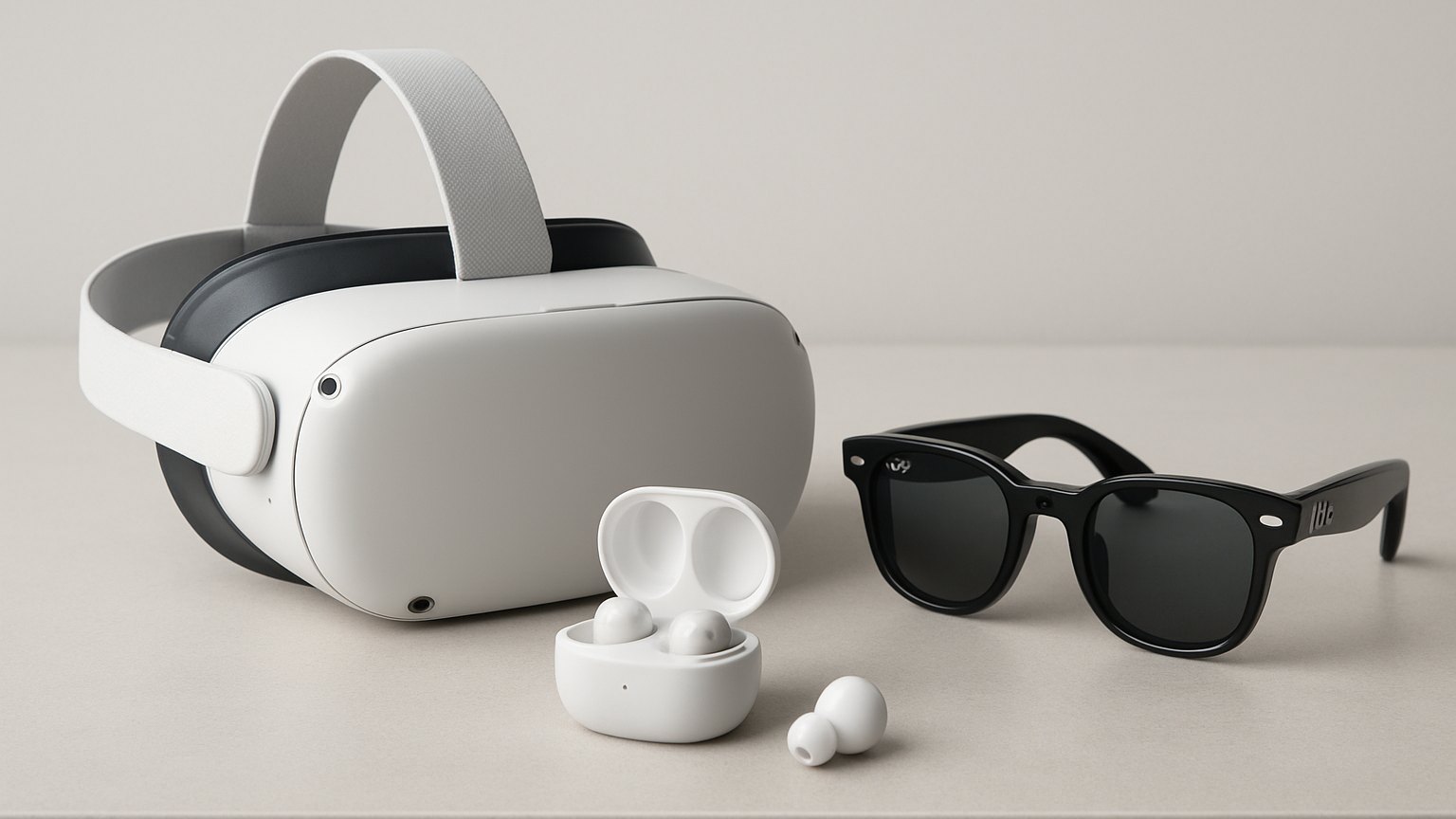
Overview of Meta's Latest Innovations
At Meta Connect 2026, CEO Mark Zuckerberg unveiled a range of new hardware products aimed at enhancing virtual and augmented reality experiences. Key among these innovations are a new VR headset poised to compete with Apple's Vision Pro, along with advancements in smart eyewear under the Ray-Ban brand.
The New VR Headset
Meta's upcoming VR headset, referred to informally in the tech community as the "Meta Vision X," promises features that could significantly elevate the virtual reality experience. Although detailed specifications have yet to be officially confirmed, early reports suggest improvements in display technology, potentially offering a higher resolution and refresh rate than previous models. This would align Meta's offering with the premium capabilities of Apple's Vision Pro.
Implications of Enhanced VR Technology
The competitive landscape for high-end VR headsets is heating up, and the advancements in Meta's Vision X could challenge Apple's early market lead. The significance of this development lies not only in the hardware but also in the ecosystem that supports it. Meta has invested heavily in the metaverse concept, and a superior VR headset could serve as a key entry point for consumers interested in immersive virtual environments. The battle for dominance in this space is critical as it could dictate the direction of AR/VR technology for years to come.
Ray-Ban Meta Audio Smart Glasses
Meta has also expanded its smart eyewear portfolio with two new Ray-Ban models: the camera-free Ray-Ban Meta Audio smart glasses and the advanced Ray-Ban Meta Generation 3 glasses. The former focuses on audio experiences, suggesting a shift in strategy towards functionality in wearable tech rather than integrated cameras.
Features of the New Smart Glasses
The camera-free Ray-Ban Meta Audio smart glasses are designed to deliver an innovative audio experience without the privacy concerns associated with camera-equipped eyewear. While specific audio technology used in these glasses remains unsubstantiated in announcements, users can expect features such as immersive spatial audio. This could enable users to enjoy music or other audio without impacting their situational awareness — a major advantage for urban and busy environments.
In contrast, the Generation 3 glasses improve upon earlier iterations with enhanced spatial audio technology and better battery life. The adjustments in design and technology seek to merge fashion with functionality, which is pivotal given the somewhat skeptical reception of smart glasses in general.
Market Impact and Consumer Behavior
The entrance of these devices into a crowded market raises questions about user adoption. Historically, consumers have shown mixed enthusiasm for smart glasses, primarily due to issues related to privacy and utility. However, Meta’s approach to evolving its glasses to emphasize audio rather than video could play a crucial role in shifting consumer perceptions favorably. By limiting privacy concerns, Meta may attract a more cautious demographic reluctant to wear devices that could compromise their privacy.
Future Considerations for Meta
In terms of broader market impact, these developments could serve to solidify Meta's position as a leader in mixed reality innovation. The company's heavy investment in the metaverse signifies a long-term strategy that hinges not just on the current products but on how they integrate into a larger digital ecosystem. The success of these devices will be a litmus test for Meta's metaverse ambitions, enhancing or undermining user engagement depending on their adoption rates.
Conclusion
While these products are still shrouded in a mix of confirmed facts and speculation, Meta's dual push into high-end VR and enhanced smart wearables reflects a critical strategy. As the landscape evolves, consumer response will be crucial in understanding whether these innovations meet the expectations set by marketing and early releases. The developments at Meta Connect 2026 underscore not just technological advancements but also a shift in consumer values toward privacy, functionality, and immersive experiences.
Final Thoughts
With competitors like Apple also investing heavily in this space, the stakes for Meta have never been higher. Whether or not these innovations can capture consumers' imaginations remains to be seen, but the direction they are taking is crystal clear: Meta is doubling down on hardware that enhances its vision of the metaverse while addressing consumer concerns.
For more information about these developments, visit Meta's official website