
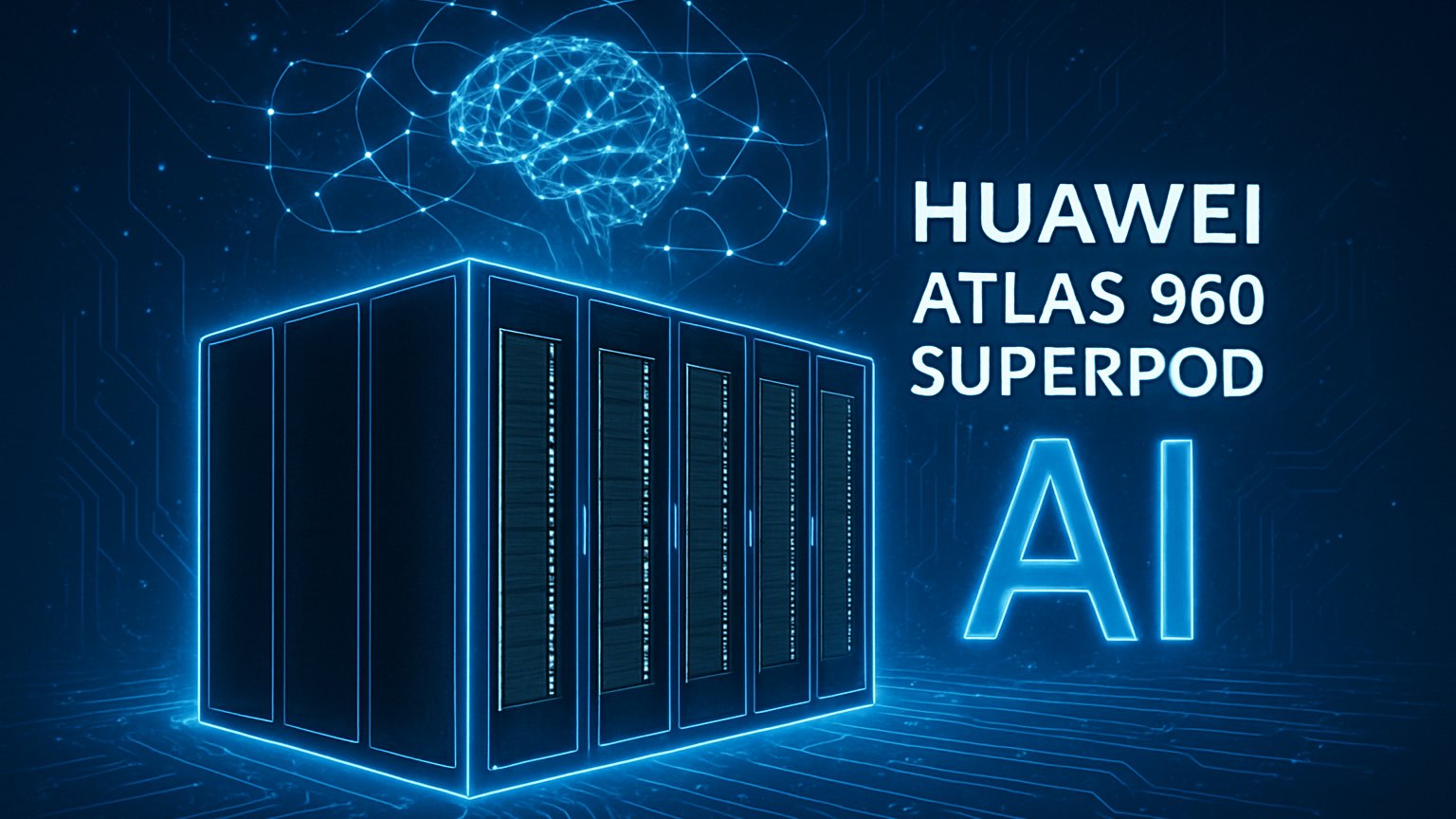
The Unveiling of the Atlas 960 SuperPoD
Huawei has recently announced the launch of the Atlas 960 SuperPoD computing cluster, a significant advancement in the realm of Artificial Intelligence (AI) hardware. This new computing cluster is touted as a powerhouse designed to enhance AI computations efficiently and effectively. Built upon Huawei's self-developed AI chips, the Atlas 960 aims to push the boundaries of AI capabilities across various sectors, from cloud computing to autonomous driving.
Features of the Atlas 960 SuperPoD
The Atlas 960 SuperPoD is equipped with a variety of features that make it a formidable contender in the global AI hardware market. One key feature is its modularity, allowing enterprises to tailor configurations according to their specific needs. This adaptability is particularly crucial in today’s rapidly changing technological landscape, where static systems quickly become obsolete.
Additionally, the processing power of the Atlas 960 is designed to handle complex tasks, such as data analysis and machine learning. Furthermore, Huawei claims that the SuperPoD can achieve a high level of energy efficiency, an essential aspect as companies increasingly prioritize sustainability in their operations.
Why This Development Matters
The introduction of the Atlas 960 SuperPoD signals Huawei's strong commitment to advancing AI chip technology. Given that AI is becoming increasingly integral in business operations worldwide, innovations like the Atlas 960 could help companies harness the unlocking of significant value from AI applications.
Moreover, the global AI market is projected to grow at an exponential rate. According to various industry reports, the market size for AI hardware is expected to reach trillions of dollars over the next decade. Therefore, hardware capable of handling immense AI workloads could position Huawei favorably among its competitors such as NVIDIA and Intel who have traditionally dominated this space.
Distinguishing Facts from Claims
While Huawei has made bold claims regarding the capabilities of the Atlas 960, it is crucial to distinguish between verified performance metrics and projections. For example, Huawei states that the SuperPoD can outperform existing solutions in certain AI workloads. However, independent benchmarks evaluating these claims are not yet widely available.
Thus, while Huawei's presentation paints an optimistic picture of the Atlas 960’s capabilities, stakeholders should be attentive to future reviews and performance tests. This cautious approach extends to Huawei’s broader claims about its R&D capabilities and positioning within the AI landscape.
Plans for Future AI Chips
Huawei is not stopping at the Atlas 960. The company has articulated ambitious plans for future AI chips, aiming to enhance their capabilities significantly. Industry experts have noted that Huawei intends to develop chips optimized for specific AI applications, which could include advancements in natural language processing, image recognition, and real-time data processing.
The vision is twofold: First, to keep pace with rapidly evolving technologies and second, to offer more specialized solutions that cater to distinct industry needs. Furthermore, insights from Huawei’s roadmap suggest a focus on AI solutions that are not just powerful, but also accessible for a range of mid-tier companies, thus democratizing AI technology.
Implications for Global AI Hardware Market
The entry of Huawei's advanced AI chips and computing clusters into the global marketplace could have significant implications for existing AI infrastructure. More competition in this space may lead to reduced costs for consumers and enterprises, as well as accelerated innovation driven by the need to stay ahead.
Moreover, as Huawei expands its R&D efforts and enters new markets, the geopolitical landscape surrounding AI technology will likely become more complex. Trade restrictions and national security issues already complicate the existing tech competition. Huawei’s advancements may provoke responses from other tech giants and governments, influencing global supply chains and partnerships.
Looking Ahead
As Huawei continues to develop and promote its AI hardware offerings, industry stakeholders will be closely monitoring to see if the Atlas 960 SuperPoD delivers on its promises. The potential for growth in AI applications necessitates powerful hardware, and Huawei is positioning itself as a key player in this expanding domain.
Ultimately, the advancement of Huawei's AI chip technology could not only disrupt existing paradigms but also redefine how enterprises engage with AI technology in the years to come. Innovations such as the Atlas 960 highlight the rapid pace of technological advancement and the imperative for organizations to adapt accordingly.
The AI hardware landscape is poised for exciting developments as Huawei and other tech giants vie for dominance in this crucial sector, shaping the future of AI applications worldwide.