
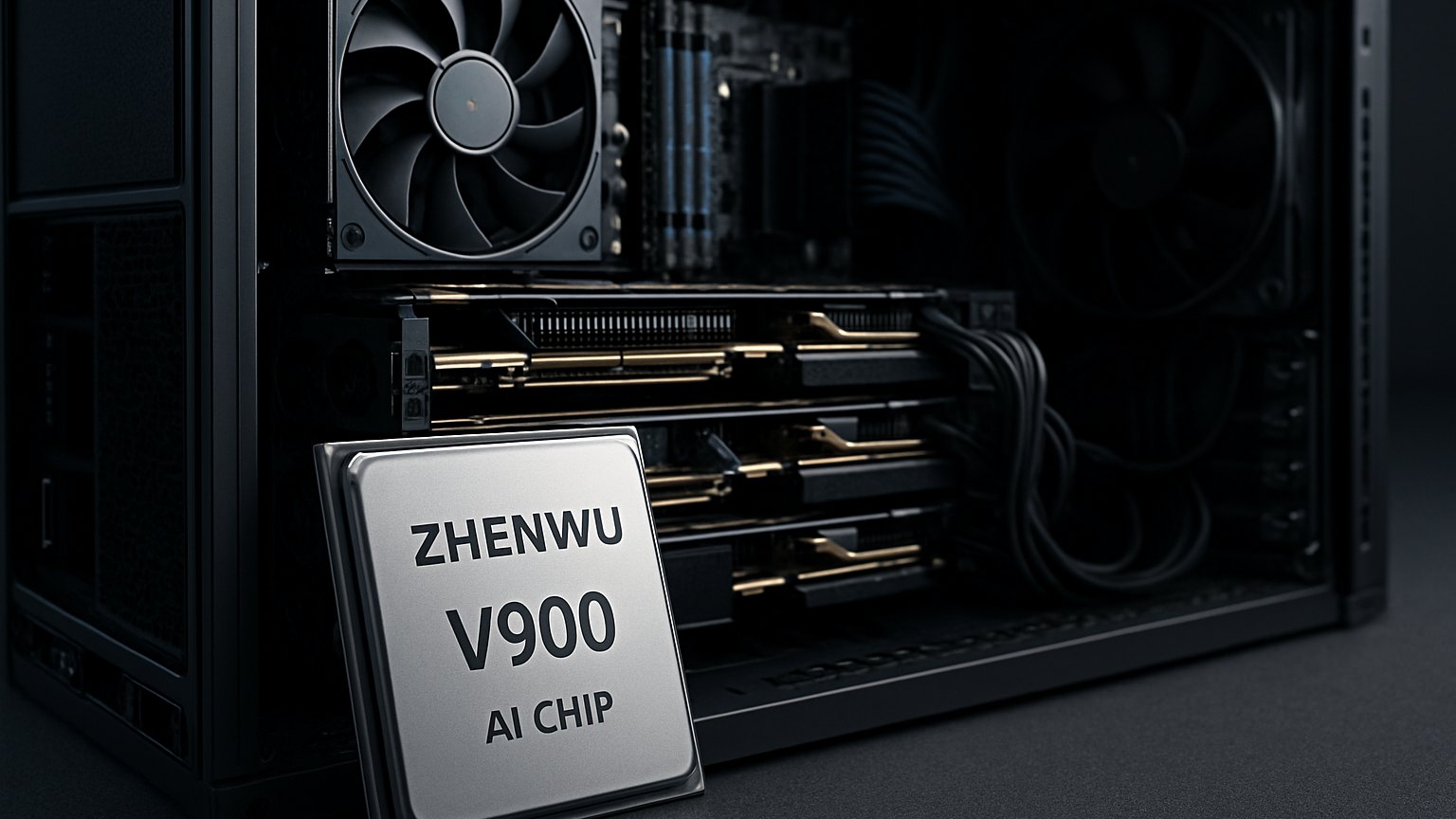
Introduction to Alibaba's Zhenwu V900 AI Chip
In a significant leap for artificial intelligence hardware, Alibaba recently launched its Zhenwu V900 AI chip, marking a pivotal moment in the realm of AI model development. This new chip is designed to optimize machine learning tasks, enhance processing speeds, and lower operational costs, which could redefine how AI models are deployed and scaled across various industries.
The Specifications of the Zhenwu V900
The Zhenwu V900 boasts impressive specifications. It is reported to be capable of delivering more than 128 teraflops (trillion floating-point operations per second) of processing power, which positions it among the most powerful AI chips available in the market today (TechCrunch). Additionally, the chip is built on a 5nm process, allowing for greater efficiency and performance, which is crucial for AI-intensive applications.
Why This Development Matters
Enhancing AI Model Training
One of the core advancements that the Zhenwu V900 presents is its potential to accelerate AI model training significantly. Traditional methods require substantial computational resources and often take weeks or months to produce reliable models. The increased teraflop capability enables rapid iterations and testing of models, giving developers the flexibility to refine their algorithms and improve outcomes without the long wait times associated with previous chip generations.
Cost-Efficiency in AI Deployment
Alibaba claims that the Zhenwu V900 will not only enhance processing power but also improve cost-efficiency. The chip enables more processing in a compact space, which reduces the necessary hardware footprint and power consumption. This is particularly relevant for companies looking to deploy AI models at scale. By minimizing costs, smaller firms could now compete more effectively against larger enterprises in AI development, democratizing access to advanced technologies (The Next Web).
Potential Impact on AI Ecosystems
The launch of the Zhenwu V900 is not merely an isolated development; it has broader implications for the global AI ecosystem. As demand for AI capabilities skyrockets, hardware advancements like this could lead to transformative changes across multiple sectors, including healthcare, finance, and transportation.
Implications for Competitors
Competitors such as NVIDIA and Intel, who dominate the AI chip market, may need to reassess their strategies in light of Alibaba's entry. The Zhenwu V900's combination of performance and cost-efficiency poses a threat to established players. If Alibaba successfully markets this chip, it could erode some of the market share held by these competitors, prompting them to innovate more rapidly in response (/NVIDIA)
Driving AI Research and Development
More powerful chips can motivate researchers to explore novel AI algorithms that were previously impractical due to computational limitations. As the barrier to entry lowers for developing complex AI models, advancements in machine learning methodologies may emerge, enhancing capabilities and applications across the board. This can lead to breakthroughs in areas like natural language processing, computer vision, and autonomous systems.
Challenges Ahead
Even with its promising specifications, several challenges remain surrounding the Zhenwu V900.
Market Adoption
The transition from established processors to new hardware can be slow due to compatibility and infrastructure needs. Companies currently invested in NVIDIA or Intel-based systems may hesitate to switch unless there are compelling reasons or demonstrated results from the Zhenwu V900.
Reliability and Real-World Testing
While initial claims regarding the chip's capabilities are impressive, real-world applications often reveal gaps not visible in controlled benchmarks. Assessing the chip's performance in various tasks, particularly over extended periods, will be critical to validate Alibaba's claims and ensure reliability before widespread adoption occurs.
Conclusion
The Zhenwu V900 represents a significant step in the evolution of AI chips, promising accelerated processing power and cost efficiency that could change the dynamics of AI model development. As the industry observes the chip's real-world impact, Alibaba positions itself as a formidable player in the AI hardware space. The next few months will be critical for gauging how effectively the chip can disrupt existing markets and open new avenues for innovation.
Whether it will unlock new potential for AI systems remains to be seen, but it certainly sets the stage for exciting developments in the field.